
When someone needs a plumber, sparky or builder, they usually pick up their phone, search Google and call one of the first few businesses that look reliable. A good trade website makes sure that call comes to you. Here’s what every tradie website needs, and what you can leave out.
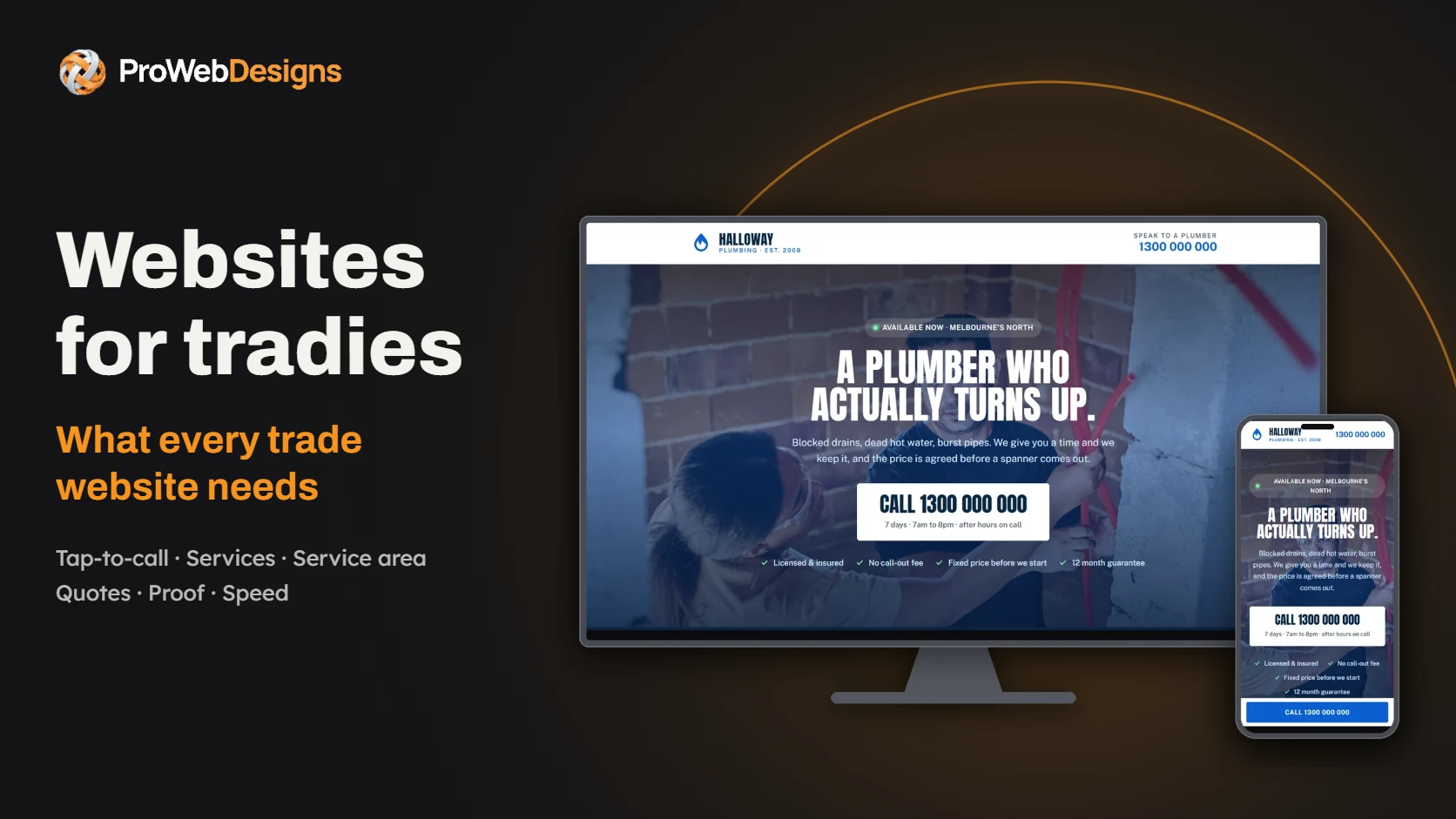
The short answer
- Your phone number at the top, as a tap-to-call button on mobile.
- A clear list of your services, written the way customers search for them.
- Your service area, naming the suburbs and towns you cover.
- A simple quote form that works properly on a phone.
- Proof you’re legitimate: licence details, insurance, real photos of your work and Google reviews.
- A fast-loading site, because most of your visitors are on a phone, often on site or in the car.
Why tradies need a website at all
Plenty of tradies get by on word of mouth, and that’s great while it lasts. But even a referral will usually look you up before they ring. If they can’t find you, or they find a Facebook page that hasn’t been updated in two years, some of them will call someone else.
A website also works when you can’t answer the phone. While you’re up a ladder or under a house, it’s still telling people what you do, where you work and how to book you.
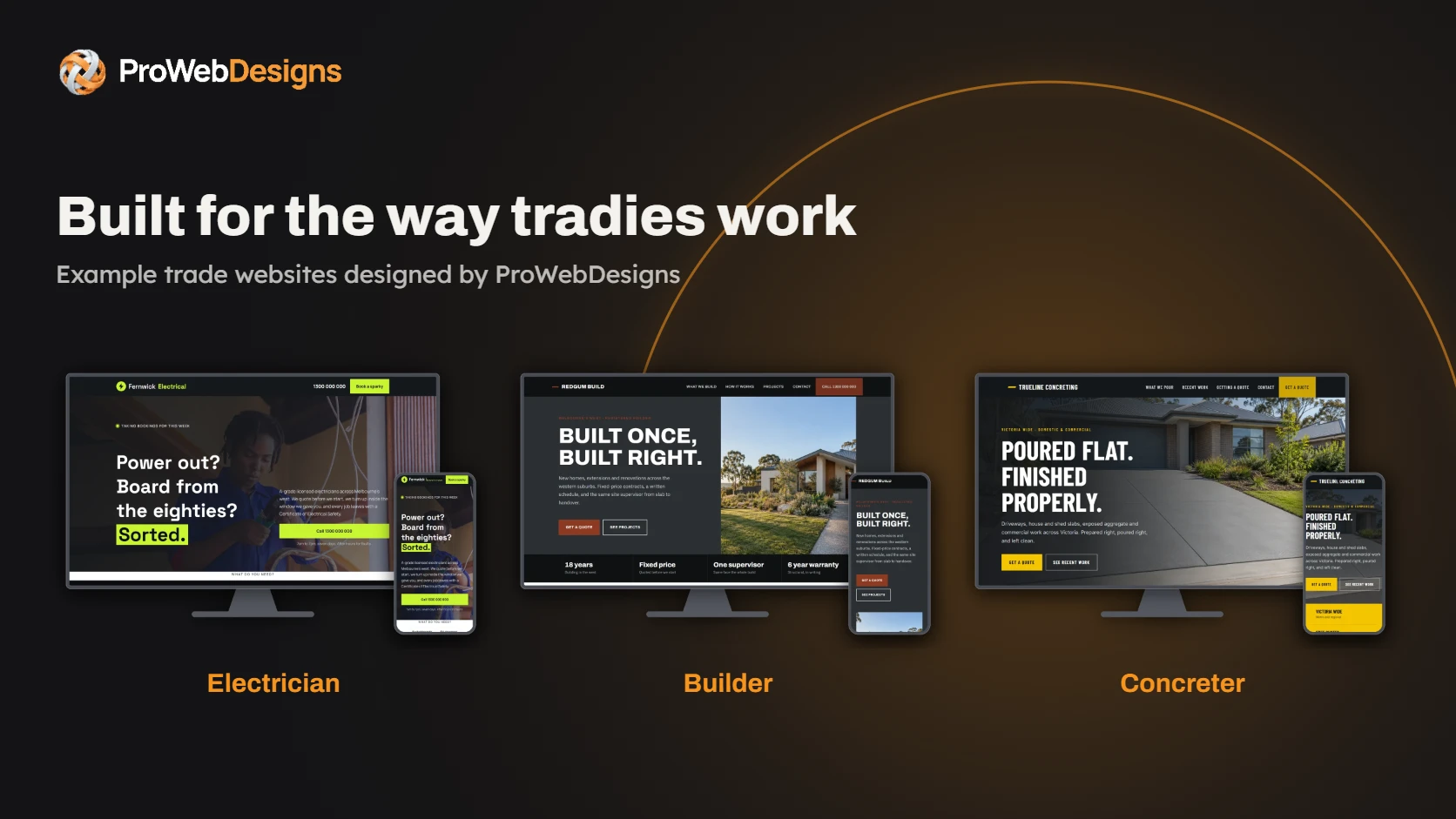
What every trade website needs
1. A phone number people can tap
Put your number in the header of every page, and make it a tap-to-call link so mobile visitors can ring you with one tap. If you’d rather take enquiries in writing, put a “Get a quote” button right beside it.

2. Your services, in your customers’ words
Customers search for “blocked drain”, “hot water repair” or “switchboard upgrade”, not “plumbing solutions”. List each service you want more of, and give your main ones their own page or section with a short explanation. This helps customers and it helps Google match you to the right searches.
3. Where you work
Name the suburbs, towns or regions you cover. “Servicing Melbourne’s north: Preston, Reservoir, Thornbury, Bundoora and surrounds” tells a customer straight away whether you’ll come to them, and it gives Google local signals to work with.
4. A quote form that actually works on a phone
Keep it short: name, phone, suburb, what they need and an option to attach a photo. Every extra box loses a few people. Test it on your own phone and make sure the enquiry lands in an inbox you actually check.
5. Proof you’re the real deal
Customers are letting you into their home, so trust matters. Show your licence number where your state requires it, mention that you’re insured, and use real photos of your own jobs rather than stock images. Link to or display your Google reviews so people can see what past customers say.

6. Speed on mobile
A trade website is mostly used on phones, often on patchy mobile data. Large images and too many plugins slow a site down, and slow sites lose visitors before the page has even loaded. A well-built site should load in a couple of seconds on a phone.
What you can leave out
- Long “about us” stories. A short paragraph about who you are and how long you’ve been in the trade is enough.
- Stock photos of people in hard hats. Customers can spot them, and they make a business look less genuine.
- A blog you’ll never update. It’s better to have no blog than one that stopped in 2021.
- Pop-ups and auto-playing videos. They get in the way on a phone.
One page or several?
A single, well-organised page is often enough for a tradie starting out or working in one area. It can cover your services, service area, reviews and contact details. If you offer several distinct services or cover a wide area, separate pages for each service and region give you more chances to show up in Google for specific searches.
Don’t forget your Google Business Profile
Your website and your Google Business Profile work together. The profile is what puts you on Google Maps and in the local results with your reviews and phone number. Make sure it links to your website, and that your business name, phone number and service area match on both.
Frequently asked questions
How much does a website for a tradie cost?
It depends on how many pages you need and who builds it. A professionally built one-page trade website typically starts from around $1,000, with multi-page sites costing more. Our guide to small business website costs in Australia breaks this down in more detail.
How long does it take to get a trade website live?
A one-page site can usually be launched within one to two weeks, mostly depending on how quickly your photos, licence details and service list are ready.
Will a website get me to the top of Google?
Not on its own, and not overnight. A well-built site with clear services and service areas gives you a strong start, and reviews, your Google Business Profile and fresh content help you climb over time.
Want a trade website that brings in the calls?
See what we build for trades, or get a free website audit of your current site. There’s no obligation.